
Throughout history, our ability to master motion has defined human progress. Motion remains at the core of modern industry. The electric motors and drives that control it are the unsung heroes, powering everything from production lines to offshore platforms and critical infrastructure. When they perform flawlessly, operations run smoothly. When they fail unexpectedly, the consequences can be severe. Mika Kiviniemi, Project Manager at ABB’s Quality and Reliability Laboratory in Helsinki, explains how the company’s combination of data analytics and physics-based reliability testing is improving motor and drive reliability, helping industries predict and prevent failures before they occur.
ABB’s approach to reliability testing is among the most rigorous and sophisticated in the world. Our state-of-the-art, 6,000-square-metre testing facilities in Helsinki, Finland, demonstrate this, providing one of the most advanced environments dedicated to understanding and improving the durability of drives and motors.
Backed by more than €100 million in investment and decades of collective expertise, our approach combines sophisticated testing capabilities with a deeply integrated global supply chain. This commitment stems from a simple but powerful philosophy: a drive is only as strong as its most vulnerable component. Every innovation, test and improvement ties back to that guiding principle.
In the modern industrial world, it is easy to overlook the technology that keeps everything in motion. Motors and drives rarely attract attention until an unexpected fault brings operations to a halt. Consider the potential impact of a motor failure in a hospital, aboard a research vessel or on a space platform. Although such dramatic scenarios are rare, they illustrate the immense responsibility these components bear in keeping the world moving safely and efficiently.
Simulating the real world
When drives and motors leave the controlled factory environment, they enter a world full of challenges, including fluctuating temperatures, vibration, corrosion, electrical transients and mechanical wear. Predicting exactly how they will respond to all those stresses is, in theory, nearly impossible.
At ABB, we turn that uncertainty into a learning opportunity. By recreating real-world stresses under controlled laboratory conditions, our engineers compress the effects of years of wear and unpredictable operation into just weeks or months. This allows us to observe how and why components fail, well before those issues could affect a customer’s application.
The most valuable insights often come when a product fails, but that is also the hardest moment to capture because there is little time for a thorough investigation. We recreate those moments in the laboratory, allowing our engineers to study and understand failures safely and repeatedly.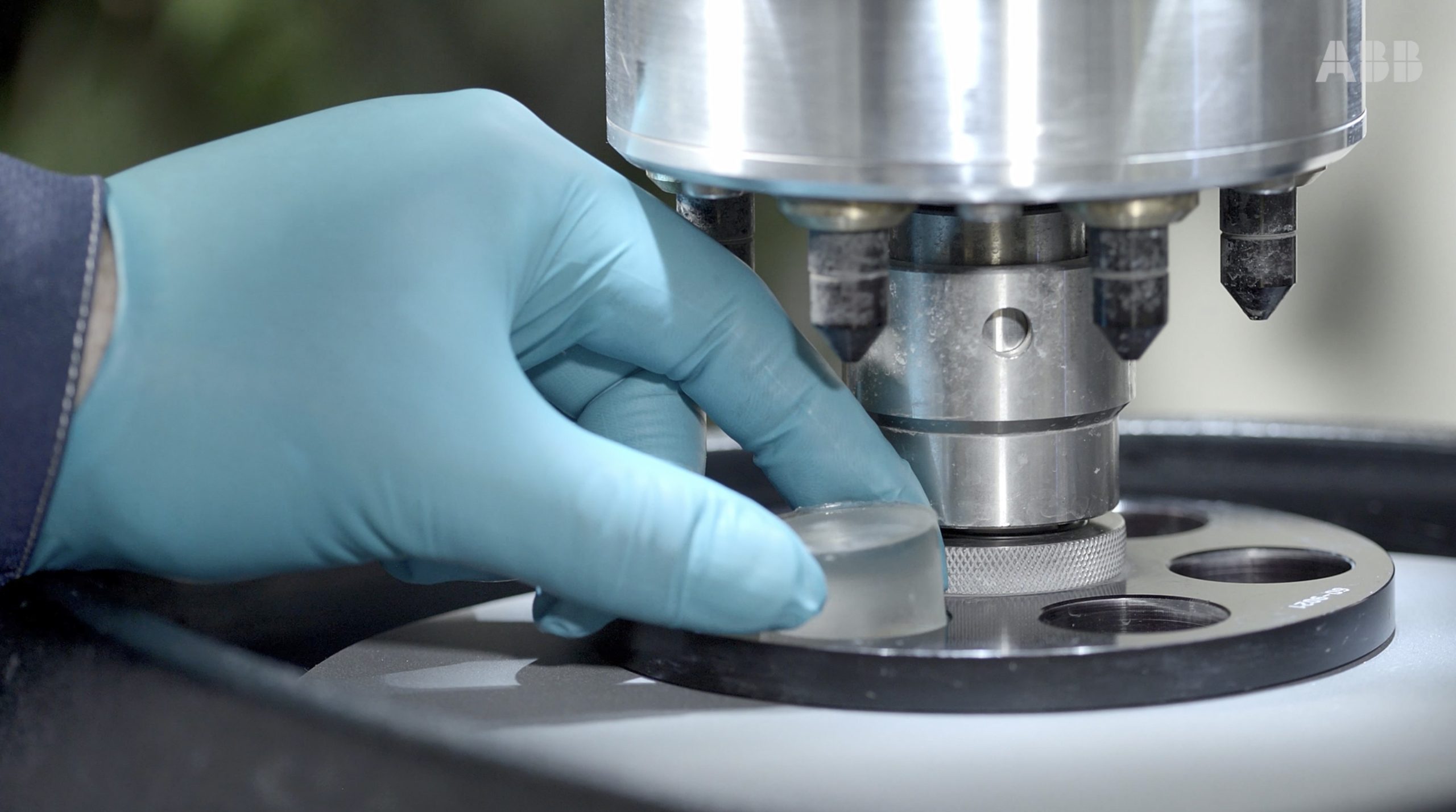
Testing motor and drive reliability to the limit
The Helsinki facility is committed to mastering what we call the physics of failure – the process of understanding precisely how and why equipment reaches its limits. The facility is purpose-built to push products far beyond their normal operating conditions, revealing exactly where and how breakdowns occur.
To accelerate material fatigue and analyse component performance under varying loads, the laboratory conducts a wide range of electrical, mechanical and environmental stress tests. Electrical overstress testing assesses insulation strength, voltage tolerance and semiconductor behaviour under extreme peak loads. Mechanical testing uses vibration rigs and shock tables, alongside thermal cycling chambers, to compress years of operational wear and stress into a short timeframe. Environmental simulators subject components to extreme heat, cold, humidity, corrosive gases and salt mists, recreating conditions found in challenging environments, including coastal and marine settings.
Each test uses extensive instrumentation to measure performance at every stage. The resulting data is analysed in depth and fed directly back into ABB’s design and manufacturing processes. This closed feedback loop ensures that every insight from the laboratory becomes a step towards more durable, efficient and reliable products, turning controlled chaos into continuous innovation.
Lessons hidden in failure
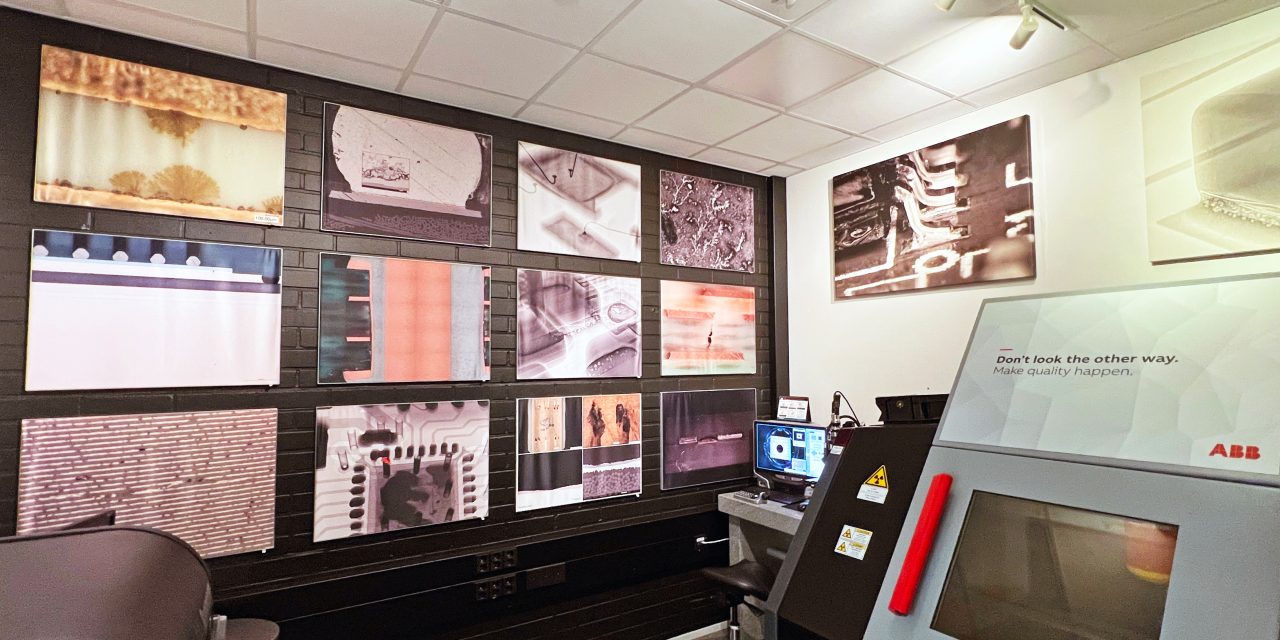
Many breakthroughs at the laboratory begin with intentional failure. When a drive or component finally reaches its limit during testing, engineers conduct detailed forensic analyses to uncover exactly why it happened. By examining every detail – from material fatigue and solder joint wear to design geometry and unexpected environmental stress – they can determine the root cause of each failure.
These investigations become a powerful source of knowledge, often yielding surprising insights. Take, for instance, ABB’s research into lift drive systems. It found that units operating intermittently, such as those used in executive or maintenance lifts, can deteriorate faster than units running continuously. The culprit is not overuse, but thermal fluctuation. Equipment in constant use reaches a steady operating temperature, while intermittently used systems repeatedly heat up and cool down, accelerating material fatigue.
Insights like these reveal that reliability in the real world is far more complex than simply counting hours of use. True durability depends on understanding the complex interactions between thermal, electrical and mechanical stresses throughout a system’s full life cycle.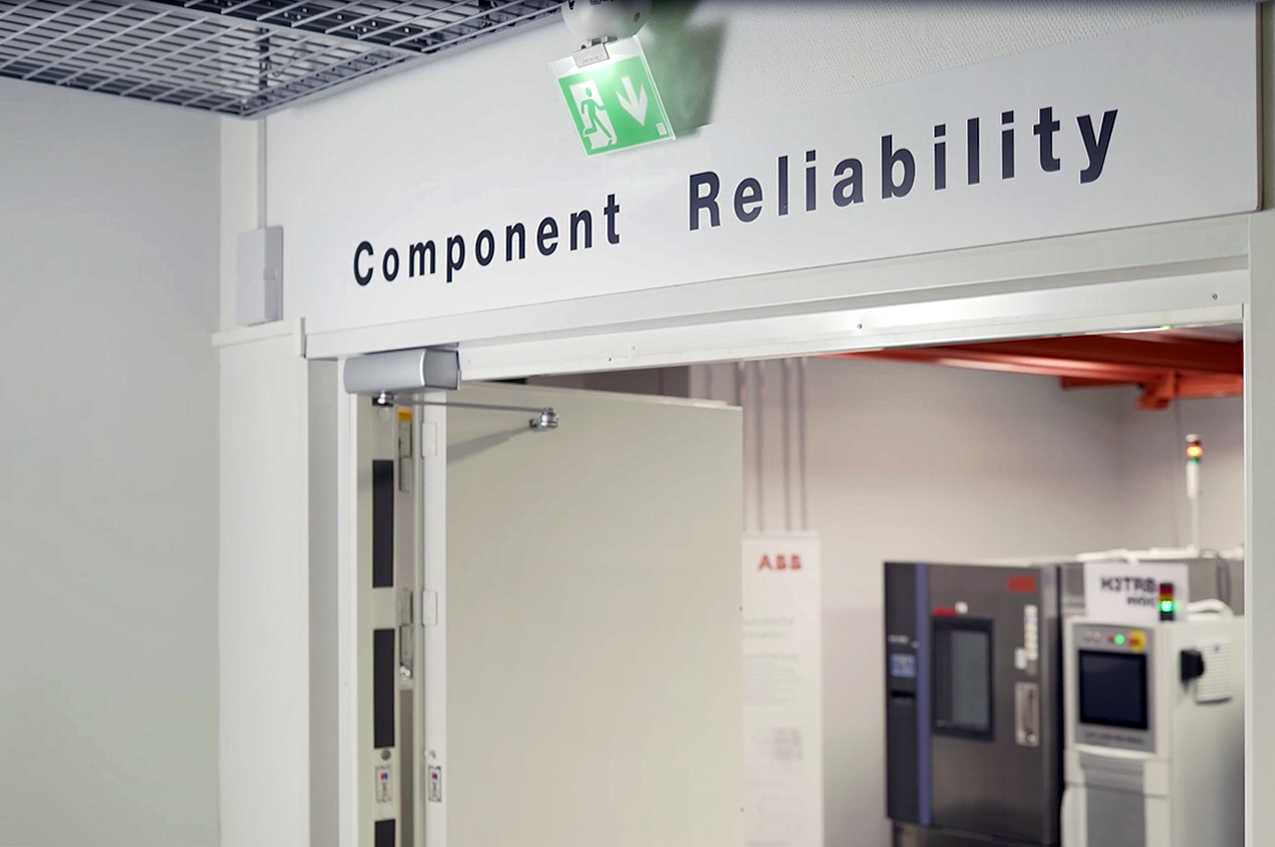
Advancing reliability, driving sustainability
At ABB, motor and drive reliability goes hand in hand with sustainability. By extending the operational life of drives and motors through a deeper understanding of how and why components age, we help our customers achieve both environmental and economic gains. Longer-lasting equipment means fewer replacements, less material waste and a smaller carbon footprint, while improving uptime and energy efficiency.
The real innovation lies in our willingness to learn from failure. Every component pushed to its limit in the laboratory provides valuable data, and every data point informs a better, safer and more durable design. These insights extend across industries, helping customers in manufacturing, energy, transport and beyond operate with greater confidence and resilience.
For businesses where even one motor or drive failure can bring operations to a standstill, our science-led approach offers a measurable advantage. Studying the physics of failure goes beyond predicting faults to designing them out, helping ensure that the technologies driving modern industry continue to perform reliably, sustainably and without interruption.
Read other recent instrumentation news: https://instrumentation.co.uk/category/news/


