
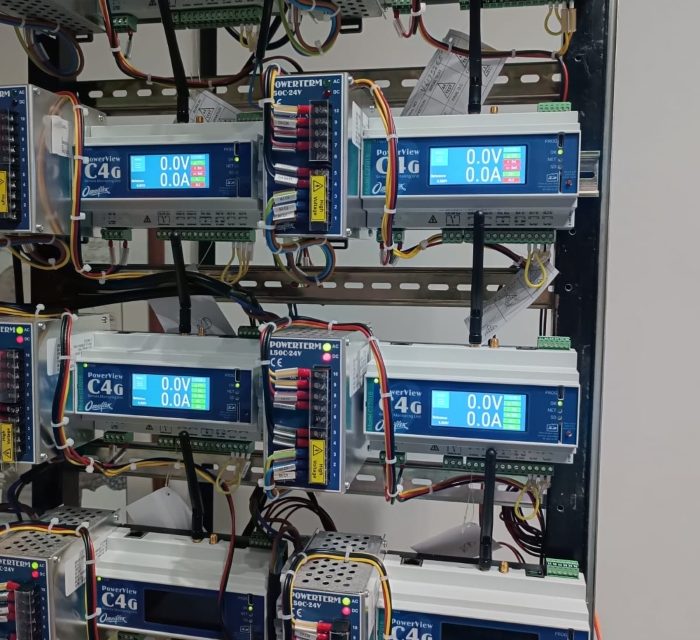
Cathodic protection (CP) is essential for maintaining the integrity of buried or submerged metallic pipelines and other critical infrastructure. Impressed Current Transformer Rectifiers (T/Rs) provide the controlled DC current and voltage levels to protect the structures against corrosion. However, ensuring these systems continue to perform as intended can be challenging, particularly when infrastructure is remote or difficult to access. Here Ian Loudon, international sales and marketing manager at cathodic protection specialist Omniflex, explores how remote monitoring can overcome these challenges.
Corrosion is a major risk factor for oil and gas pipelines, particularly those that are buried or under water. Damage to pipelines caused by corrosion can result in unexpected and catastrophic failures as pipes burst and release whatever they’re transporting into the local environment.
However, in practice, it is not as simple as installing a cathodic protection system and moving on. A common worry for asset managers is whether CP systems are performing as intended to control corrosion. Ongoing monitoring is therefore essential to ensuring protection remains effective.
Traditional corrosion control techniques for pipelines
The impressed current cathodic protection systems used to protect pipelines from corrosion typically use phase control T/R units that enable higher current levels than galvanic systems by forcing electrons onto the metal, countering natural corrosion processes.
This reliability means many phase control T/Rs remain in service for decades, protecting critical infrastructure long after installation.
Test posts are designated quality control points along a pipeline where technicians measure and verify the effectiveness of the CP system in place by checking pipe-to-soil potential, which serves as a key indicator of protection status. Traditionally, these measurements required manual, on-site inspections, which are labour-intensive, costly and, often, hazardous, especially in remote or hard-to-access locations.
Operational challenges of manual inspection and testing
Regulatory requirements often mandate frequent reporting, and failure to comply can result in penalties.
Manual CP testing requires frequent site visits, even when pipelines traverse difficult, dangerous or hard-to-reach geographies. This process demands highly skilled personnel, incurs significant travel and logistics costs, and exposes workers to potential hazards.
To make matters worse, in environments affected by stray currents or electrical interference, snapshot measurements may miss critical transient conditions that could indicate corrosion risk. A technician may therefore complete a difficult site visit only to find that the measurement provides a limited picture of what has happened between inspections.
Remote monitoring as a solution
The introduction of remote monitoring systems using IoT, wireless sensors and cloud-based data platforms has transformed CP management. These systems provide continuous, real-time data on cathodic protection performance, revealing trends and anomalies that manual inspection could miss.
Remote monitoring also centralizes data access, enabling multiple stakeholders to view historical and current CP status through user-friendly dashboards. This reduces the reliance on frequent site visits while giving engineers greater visibility of system performance and supporting faster intervention when problems arise.
The benefits are clear: fewer costly field visits, improved worker safety, more effective preventative maintenance and automated records to support regulatory reporting.
The challenge, however, is that many phase control T/Rs currently protecting pipelines were installed decades ago and were never designed to accommodate modern remote monitoring technology. Replacing an otherwise functional T/R simply to gain monitoring capabilities can be difficult to justify.
Unlocking remote monitoring for aging pipeline T/Rs
This is where Omniflex’s PowerView C4 provides an alternative. The module can connect to existing tap or phase control T/Rs to remotely monitor their performance, allowing operators to introduce modern monitoring without replacing functional CP infrastructure.
The C4 can connect wirelessly to the cloud or via Ethernet or serial communications to a local network, integrating with existing CP infrastructure of all ages and requiring no additional signal conditioning instruments or specialist intervention.
The C4 provides live, accurate data for current and voltage with long-term logging, helping improve fault detection and response. This is particularly valuable where a T/R is connected to multiple anodes. If one anode fails, for example, the resulting change in overall current may previously have provided little indication of which anode was responsible. Greater visibility of live performance makes it easier to identify and respond to faults.
The C4 can also support remote adjustment, auto-potential control and remote CP testing, further reducing the need for engineers to visit difficult or hazardous sites.
For critical infrastructure that relies on ageing but functional phase control T/Rs, retrofitting the C4 provides a cost-effective route to continuous remote monitoring, helping asset managers maintain oversight of CP performance without replacing equipment that still has useful service life.
To learn more about Omniflex’s range of cathodic protection instrumentation, read the company’s CP sector overview on its website.


