There is understandably huge excitement around AI and what it could mean for industry. Predictive maintenance, digital twins, automated quality control, energy optimisation and intelligent supply chains all promise significant improvements in productivity and efficiency.
However, there is a real danger that the conversation can start in the wrong place. Successful industrial digitalisation doesn’t start with AI. It starts with a real operational problem, the right data and the ability to act on it.
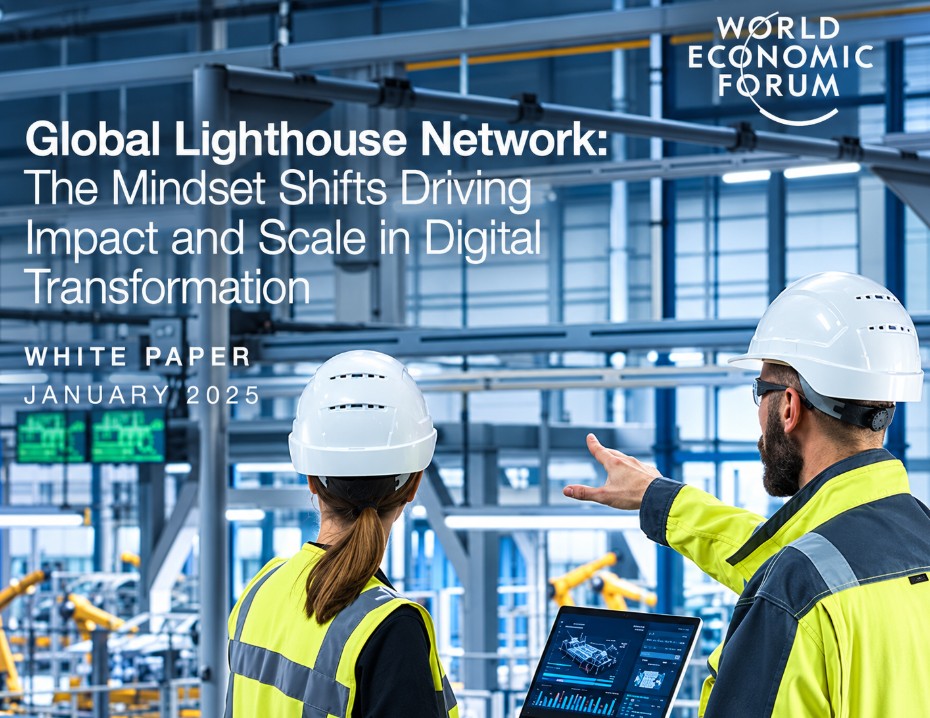
That was PowTechnology’s main takeaway from the World Economic Forum’s (WEF) 2025 Global Lighthouse Network report. The report examines some of the world’s most advanced manufacturing and industrial sites and looks at what separates successful digital transformation from projects that never get beyond the pilot stage. There are plenty of impressive technologies involved, but the recurring theme is practical:
- Start with the problem.
- Get the data foundation right.
- Improve the process.
- Use technology to amplify the result.
That reflects how PowTechnology has approached industrial automation and connected technology for more than 35 years.
The report’s findings demonstrate why there is so much interest in industrial AI. Among the latest World Economic Forum Lighthouse sites, 77 per cent of the top five use cases use analytical AI and 9 per cent use generative AI. Those AI-enabled use cases have delivered average improvements of more than 50 per cent in conversion costs, cycle times and defect rates.
Behind those headline figures are applications solving specific problems. At Foxconn Industrial Internet’s Vietnam site, a system powered by a large language model (LLM) analyses machine failure logs and helps operators understand anomalies and their potential causes. The reported result was a 90 per cent reduction in unplanned downtime.
At Siemens’ Erlangen facility, more than 100 AI algorithms and extensive use of digital twins contributed to a 69 per cent increase in labour productivity, a 40 per cent reduction in time to market and a 42 per cent reduction in energy use. Both applications rely on the same foundation: data.
In industry, data often starts in the physical world
This is where industrial AI differs from many AI applications we encounter in everyday life. The information an industrial AI application needs often doesn’t start in a database.
It starts inside a machine, in an energy meter, a PLC, a tank, a vibration sensor or an industrial instrument. It might come from equipment installed 15 years ago that was never designed to communicate with a cloud platform.
To predict that a pump is going to fail, something first has to measure how that pump is behaving. To optimise energy consumption, you must first know where and when the energy is being consumed.
To optimise bulk deliveries, you need accurate information on how much product is in each tank and how quickly it is being consumed. To create a meaningful digital twin, you need reliable data from the physical asset the digital model represents.
AI may provide the intelligence, but it still needs eyes and ears in the real world. This is often where the essential work of digital transformation begins.
You probably don’t need all the data available
Digital transformation does not mean connecting everything and collecting every piece of information simply because you can. In fact, that can make the problem worse.
More data means more communications, storage, integration and complexity. What matters is having the right data for the decision you’re trying to improve. At PowTechnology, we start by asking three questions in order:
- What are we trying to improve?
- What data do we need to understand or solve that problem?
- What is the best way to get that data?
Often, the information already exists within a PLC, drive, energy meter or instrument. Sometimes, an additional sensor is required. Sometimes, the difficult part is connecting a remote asset securely and reliably. The answer depends on the problem.
Legacy equipment shouldn’t be a barrier. Few manufacturers have the budget or the justification to replace fully functional plant simply because newer equipment is easier to connect. In general, they shouldn’t need to.
Modern industrial IoT technology means data can often be extracted from existing control systems or captured with additional sensors without fundamentally changing the machine or process. That creates an opportunity to bring decades-old physical assets into a modern digital architecture.
The WEF’s 2025 Global Lighthouse Network report highlights Jubilant Ingrevia, a brownfield speciality chemical manufacturing site in India. By deploying more than 30 integrated use cases using AI, machine learning, IoT, digital twins and predictive platforms, the facility reduced overall process variability by 60 per cent and almost doubled production volume. One predictive maintenance application reduced unplanned maintenance hours by 85 per cent.
That is what we at PowTechnology find particularly interesting about industrial digitalisation. It doesn’t necessarily require replacing what you’ve already got. It can make existing physical assets easier to monitor and connect.
Technology alone is not transformation
Perhaps the most telling finding in the World Economic Forum report has little to do with AI itself. For every $2 Lighthouse organisations spend on technological innovation, they spend around $3 addressing process debt and $5 on scaling and adoption. The technology is only part of the investment.
There is limited value in detecting an impending equipment failure if nobody knows what to do when the alert arrives. A well-designed dashboard achieves very little if nobody looks at it. An AI recommendation is only as useful as the data behind it.
Digital transformation works when technology, reliable data, people and processes come together around a worthwhile operational problem.
How does PowTechnology help you?
PowTechnology has spent more than 35 years working at the boundary between the physical and digital worlds. Our technology connects sensors, instrumentation, machines and remote assets to cloud-based systems, helping customers put the information those assets generate to use.
Sometimes, the outcome is as straightforward as knowing the level of product in a remote tank without sending someone to check it. Sometimes, it means monitoring energy, temperature, pressure or environmental conditions across distributed assets.
It can also mean extracting information from an existing industrial machine and making it available to another business system.
Increasingly, that data can become the foundation for analytics, machine learning, digital twins and AI. In our experience, AI makes good industrial IoT data more valuable.
Start with the problem
The World Economic Forum’s Lighthouse examples demonstrate what sophisticated industrial AI can achieve. For businesses wondering how to get started, the lesson is simpler.
Instead of asking ‘Where can we use AI?’, start with ‘What operational problem would make a meaningful difference to our business if we could solve it?’
Then work backwards:
- Which decisions need improving?
- What information would improve them?
- Where does that information exist?
- How can you capture it securely and reliably?
- What needs to change so that someone can act on it?
Get those foundations right and AI becomes another tool you can use to solve the problem. The same approach applies to industrial digitalisation more broadly: define the problem, get the right data and use technology to deliver the outcome.
PowTechnology draws on more than 35 years’ experience to work with customers, understand their objectives and deliver industrial IoT solutions that meet their needs, offer demonstrable payback and support their wider strategy.
For enquiries, call +44 1827 310 666 sales@PowTechnology.com or use this contact form.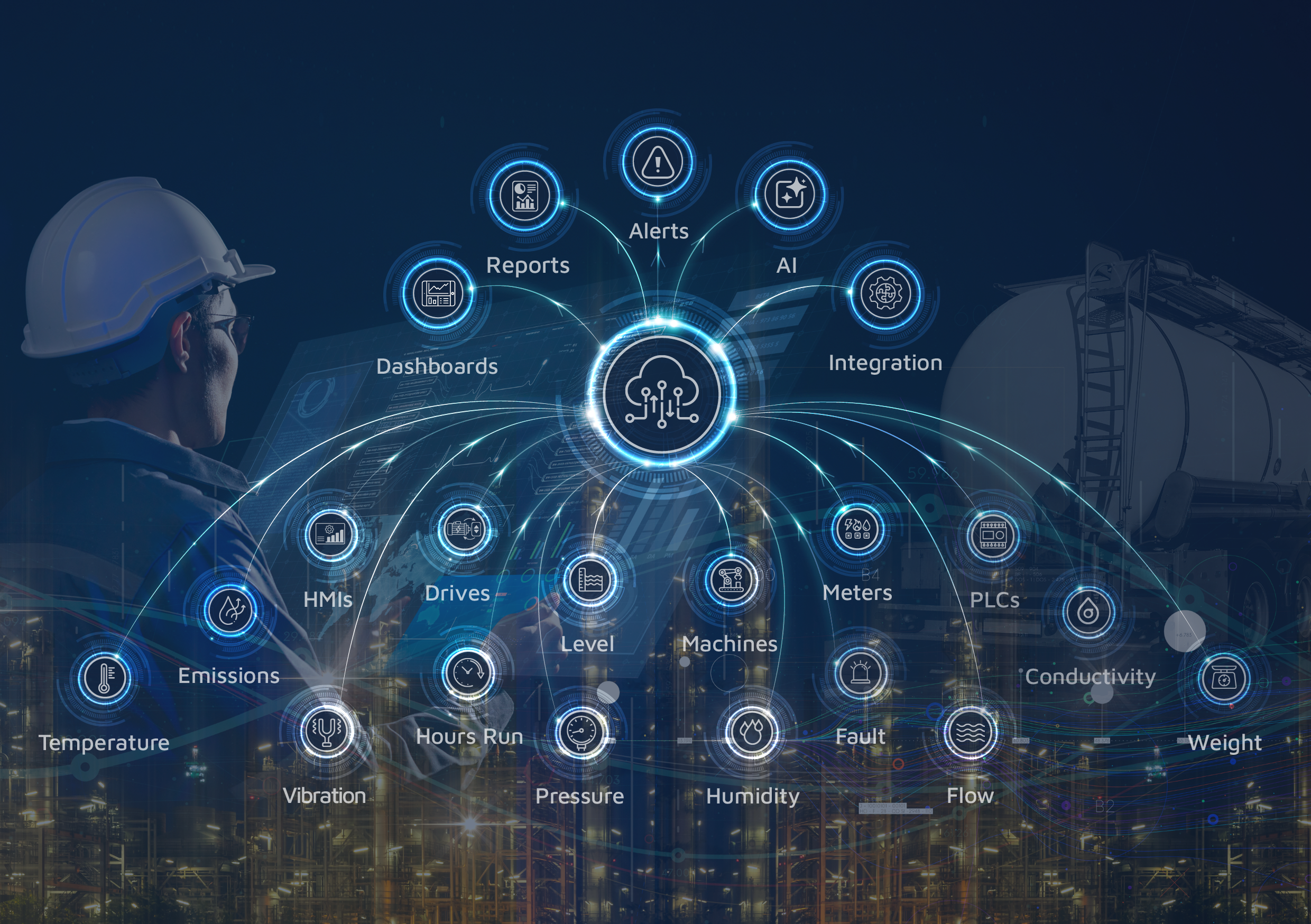
Read other recent instrumentation news: https://instrumentation.co.uk/category/news/