
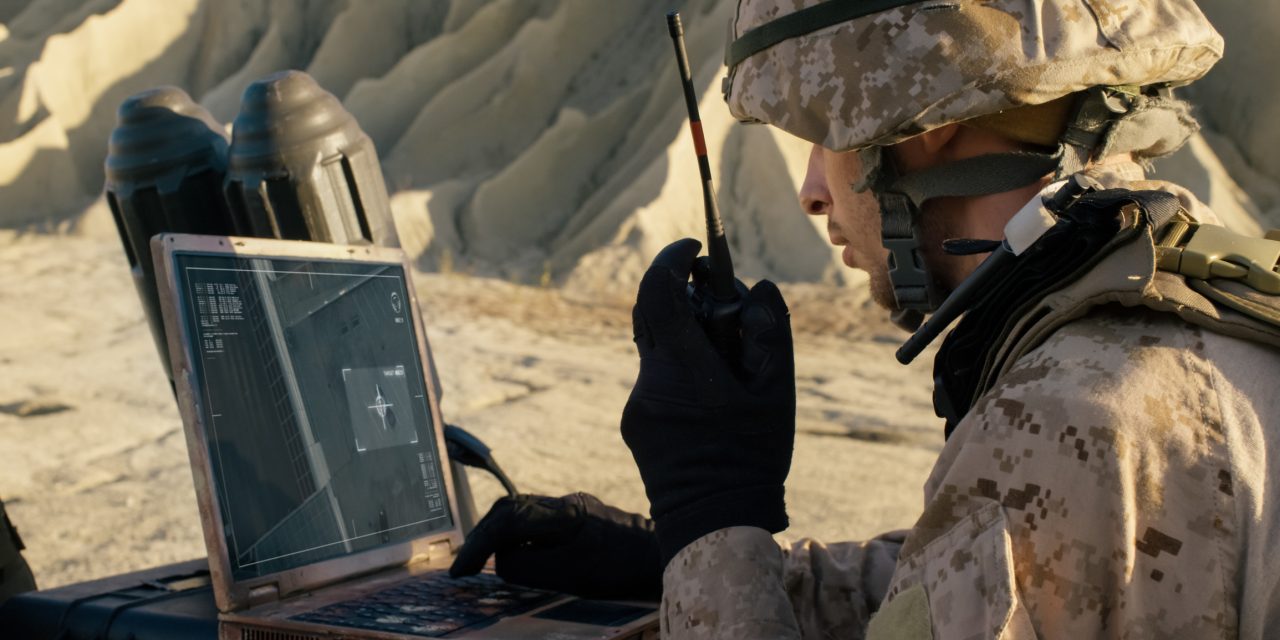
Behind every tactical radio, wearable sensor or autonomous platform lies a compact interconnect system essential to delivering power and data under extreme conditions. Connectors in defence applications must endure vibration, temperature shifts and environmental exposure, all while meeting growing demands for speed and miniaturisation. Small-form-factor (SFF) connectors address these challenges by offering rugged, high-performance solutions in minimal space.
Here, Andy Milner, product manager at military connectors specialist PEI-Genesis, explores the role of SFF connectors in modern military systems and the engineering requirements that shape their design.
Modern battlefield communications and electronic systems need uninterrupted data exchange and decentralised power distribution. Devices such as GPS units, environmental sensors, tactical radios and night vision systems rely on small interfaces that can manage both digital and analog signals in real time.
This trend is mirrored in power systems, where the proliferation of portable and wearable subsystems has increased the need for decentralised recharging and distributed power architectures. These applications require connectors that are compact yet capable of maintaining signal integrity, power efficiency and EMI shielding, all within a single, space-saving design.
To meet these demands, small form factor connectors use high-density pin layouts, hybrid contact configurations and materials chosen for their thermal stability and mechanical strength.
Reduced-profile coupling mechanisms, such as bayonet and snap-lock interfaces are designed for quick deployment without sacrificing sealing or vibration resistance. Additionally, their physical designs are optimised for integration into low-clearance or embedded housings, which aligns with the demands of modular and wearable platforms.
Managing complexity at micro scale
The move to smaller interconnects brings new engineering challenges. As sizes continue to shrink, connectors must keep mechanical stability while handling greater electrical complexity. Higher current densities can cause localised heating, which requires effective thermal dissipation critical in increasingly tight spaces.
Maintaining signal integrity across high-speed digital lines becomes more difficult as contact spacing decreases. This demands precise impedance control, effective shielding and well-engineered grounding, often within housings just a few millimetres tall.
Choosing the right materials and adhering to tight manufacturing tolerances is essential at this size. Lightweight, high-performance plastics and composite materials provide good chemical resistance, low weight and thermal stability, while precision-machined metal shells enhance mechanical reliability.
Coupling mechanisms must endure hundreds of mating cycles without losing performance, even in environments exposed to dust, moisture and corrosive substances. The small size of these connectors leaves little room for error. Mechanical misalignment, inadequate retention force or poor sealing can compromise the entire system.
Platform-specific demands
As applications expand, so do the mounting and integration requirements for connectors. Many small-form-factor connectors now support a range of configurations, board-to-board, panel-to-cable and even low- or zero-profile designs, giving engineers more flexibility when space is limited.
Modular systems often use plug-in designs with floating mounts that absorb misalignment while maintaining a secure mechanical connection. In systems worn by soldiers or mounted on vehicles, low-profile connectors reduce snag risk and overall height, enhancing operational safety and stealth.
Where extra security is necessary, integrated locking mechanisms offer tactile and audible confirmation of connection. This feature is essential for field operatives working in low-light or high-stress situations.
Coexistence with legacy interfaces
Although SFF connectors offer substantial performance benefits in modern designs, they are not positioned to replace traditional Mil-Spec connectors across all applications. Legacy standards like MIL-DTL-38999 remain vital in aerospace and defence infrastructure due to their proven reliability and load-bearing capacity. However, in situations where size, weight, and modularity matter, such as in unmanned aerial systems or soldier-worn communications, small-form-factor interconnects offer clear benefits.
As a result, contemporary systems often adopt a hybrid approach, using both legacy and miniaturised interfaces as needed to fit the operational profile. This allows designers to balance innovation with existing systems, leveraging the efficiency of SFF connectors while still utilising the proven strength of larger Mil-Spec options. This transition mirrors a broader move toward flexible, standards-compliant systems that permit gradual upgrades and technology integration.
Future integration
As system complexity increases, small-form-factor connectors are expected to evolve beyond passive hardware. Future developments may include integrated diagnostics, condition monitoring features or embedded sensors capable of detecting wear, moisture ingress or connector misalignment. These advancements would support predictive maintenance strategies and help extend system lifecycles in high-demand environments. In parallel, there is growing interest in standardising form factors across multiple platforms to support modularity, ease of replacement and rapid field reconfiguration.
Connector manufacturers have advanced SFF technology to meet mounting demands from soldier-worn kits and tactical platforms. ITT Cannon’s HDx™ series, distributed by PEI-Genesis, provides a lightweight, high-density circular SFF solution capable of supporting HDMI, USB and Ethernet in configurations significantly smaller than traditional MILDTL38999, rated for over 5,000 mating cycles and temperatures from −51 °C to +125 °C.
As military and aerospace platforms become more mobile, modular and data-driven, small-form-factor connectors have moved from supporting roles to core components. These miniature interconnects are enabling entirely new architectures for soldier-worn electronics, unmanned systems and real-time battlefield communication. With the integration of signal, power and high-speed data into rugged, compact formats, SFF connectors are directly supporting the operational agility and reliability demanded by today’s mission-critical environments.
To find out more about the wide range of SFF and Mil-Spec connectors offered by PEI-Genesis, visit www.peigenesis.com.
Read other recent instrumentation news: https://instrumentation.co.uk/category/news/

