
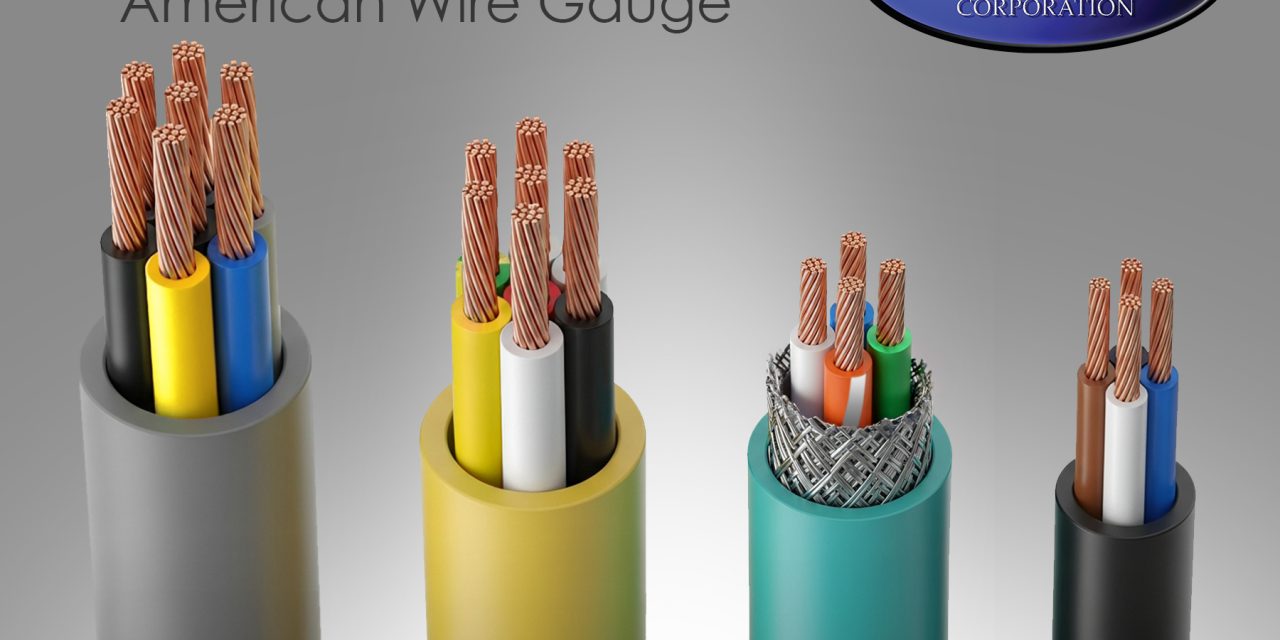
In today’s world of advanced manufacturing and automation, every detail matters, especially when it comes to wiring. Choosing the right AWG wire might seem like a small decision, but it has a big impact on how safely and efficiently your systems run. The correct wire gauge ensures that your equipment receives the proper amount of power without overheating or energy loss. It not only keeps operations reliable and safe but also helps prevent unexpected downtime and costly repairs. Understanding how wire gauge affects performance can help you make smarter choices that keep your systems running smoothly for the long term.
Why AWG Matters
AWG, American Wire Gauge, represents the standard U.S. measurement for wire diameter which extends from 0000 (the largest size) to 40 (the smallest size). Think of wire gauge like the width of a pipe: the thinner it is, the less current it can safely carry. 10 AWG wires represent the suitable option for many motor and heavy-duty equipment power transmission because they carry high current while reducing electrical resistance.
On the other hand, 22-24 AWG wires serve as an ideal choice for sensors and data lines and control signals because they offer lightweight flexibility and cost-effectiveness. The selection of an inappropriately small wire gauge will likely result in overheating and voltage loss; over sizing, although safer, adds unnecessary costs. Both situations that most manufacturers would like to avoid. AWG selection requires careful evaluation of several important factors.
Key Considerations in Selection
Power Requirements
The National Electrical Code (NEC) establishes ampacity ratings which represent the highest safe current levels that wires can carry. 12 American Wire Gauge copper wires can handle up to 20 amps according to NEC Table 310.16 which makes them appropriate for motor applications, but AWG 18 wires are commonly selected for control circuits that carry low currents, typically well below 7 amps, in order to comply with safety codes and minimize the risk of overheating in industrial environments. Always consult NEC or local code tables when choosing wire size for your specific application.
Distance and Voltage Drop
Longer cables create additional resistance, which reduces system performance. NEC Article 210.19(A)(1) stipulates that the maximum voltage drop should be no greater than 3% for all branch circuits. Therefore, to meet both NEC voltage drop requirements at 3% and peak system performance, the NEC requires 120V systems to use conductors with a 14 AWG rating or thicker (12 AWG or 10 AWG) when they extend beyond 50 feet.
Flexibility and Installation
The 22–28 range consists of highly flexible wires for use in robotics and other dynamic systems. Thicker gauges, such as 10–20 AWG, are ideal for stationary equipment as they offer greater durability and current-carrying capacity, making them perfect for motors, actuators, and control panels.
American Wire Gauge by Application
- Power Equipment (Motors, Actuators, Assembly Lines): 10–14 AWG
- Control & Signaling (PLCs, Relays, Panels): 16–20 AWG
- Sensors & Data (Low-Voltage Sensors, Ethernet Cabling): 22–28 AWG
The wiring specifications follow NEC requirements together with UL/CSA guidelines and ANSI/TIA cabling standards to provide safe and efficient wiring for industrial use.
Read other recent instrumentation news: https://instrumentation.co.uk/category/news/


