
BELIeVE (Bermondsey Electronics Limited Integration Verification Engine) is the industry’s first independent JavaScript-based automated solution for hardware/ software integration verification. Ahead of its launch, Instrumentation Monthly caught up with Bermondsey Electronics’ managing director, Peter Wrigley to find out about this innovative product…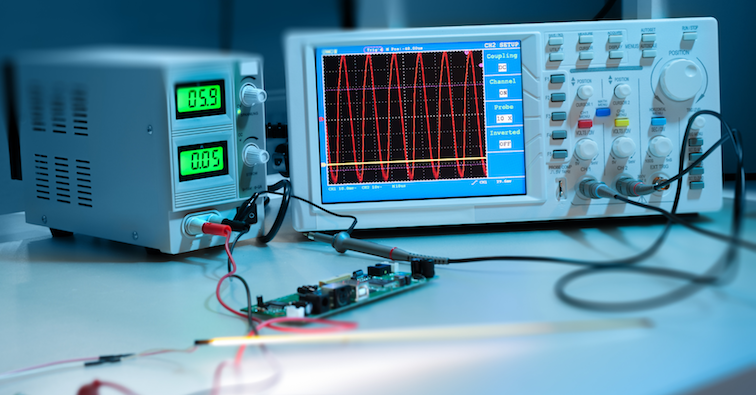
Bermondsey Electronics, an embedded systems design and test house, has launched the Bermondsey Electronics Limited Integration Verification Engine (BELIeVE). A JavaScript-based solution, this advanced integration verification engine is the first of its kind and automates the operation of networkable instrumentation to exercise a device under test (DUT) and verify that its hardware and software are functioning together as intended. BELIeVE can also be used for continuous integration (CI) and end-of-line quality assurance in manufacturing scenarios.
Explaining the development of the product, Peter Wrigley, managing director of Bermondsey Electronics told us: “We are interested in looking at the verification of design, specifically that the hardware and the software within the design are functioning together as intended. As such, we have developed this JavaScript-based solution so you can create a simulated environment for the device under test and perform that verification. In addition, reports are automatically generated, which is of great benefit to engineers that must demonstrate their designs were thoroughly verified; for safety- critical applications, for example, but also good engineering practice.”
During product development, BELIeVE can be used to inject faults and mimic events/conditions that would otherwise be hard to replicate. Wrigely explains: “What specifically interests me and Bermondsey Electronics is faults because faults are typically difficult to reproduce in tests. Faults can lead to all sorts of weird and wacky behaviour and they are, generally speaking, a pain to debug. With this product we get a high level of confidence the product is working as expected and that the interface and its environment, which is the tricky bit to test, is functioning the way we intend it to work.”
BELIeVE is effectively a new kind of embedded system development tool, one that builds on the well-proven test-driven development (TDD) methodology, with which software engineers will be familiar.
BELIeVE not only brings the product’s real hardware into the equation but also allows the creation of a simulated environment in which the DUT can operate. Once networked with instrumentation – such as benchtop power supplies, oscilloscopes, dataloggers, DMMs -BELIeVE runs scripts that can, for example, change input power, drive analogue and digital inputs, and record outputs. It is also possible to simulate user interactions, such as keypad button pushes and switch throws, meaning test can run unattended. In addition, as Wrigley highlighted, BELIeVE enables multiple engineers to work with expensive test equipment remotely – something that is important in this pandemic age as it allows tests to be carried out even when engineers are working from home.
Being JavaScript-based also answers another challenge facing industry at the moment – recruitment. By using JavaScript, it increases accessibility as it does not require engineers to have an in-depth knowledge of C# or Python.
Fully functional evaluation versions of BELIeVE-DV and -QA can be downloaded from Bermondsey Electronics’ website, www.bermondseyelectronics.com, and will function for 30 days before requiring a licence. The company also plans to launch a Youtube channel that will provide support videos for users.
“Like all good inventions, BELIeVE was born of necessity,” concludes Wrigley. “We needed a highly capable integration verification engine to support our own design and test services. When we presented the verification engine at UKEmbedded in May this year, the audience reaction was staggering. In just a little over four months we have commercialised a powerful embedded systems verification tool we feel has the potential of transforming the industry.”
