

 Calibration can determine the precision of test equipment through comparison with known benchmarks. This enables engineers to ensure that measurements taken following calibration attain an accuracy level that is satisfactory. As equipment begins to incorporate heightened sophistication and test procedure intricacy increases, more comprehensive calibration strategies should be applied.
The technological progression of equipment is having a major influence. For wireless deployment, the dynamic range required by instrumentation has risen sharply, with noise floors around 130dBC now common (where previously 80dBC would have been expected). Phase noise is making a greater contribution to overall noise. In addition, with mobile infrastructure needing to consume less power, instrumentation must contend with poorer signal/noise ratios. Furthermore, despite new equipment permitting longer calibration cycles, customers’ service level agreements often stipulate the opposite.
The question is whether to have calibration work carried out by the equipment manufacturer or a calibration house. Though manufacturers know their products better than anyone, if a company is dealing with an array of different manufacturers the amount of associated paperwork can be substantial. Also, in some cases, there may not be total clarity about the costs involved. A calibration house may present a more convenient alternative, but it must be acknowledged that many calibration houses are generic, not grasping always understanding the applications for which particular pieces of equipment are utilised. Nevertheless, if this route taken, then next the decision is should an accredited or non-accredited calibration house be utilised?
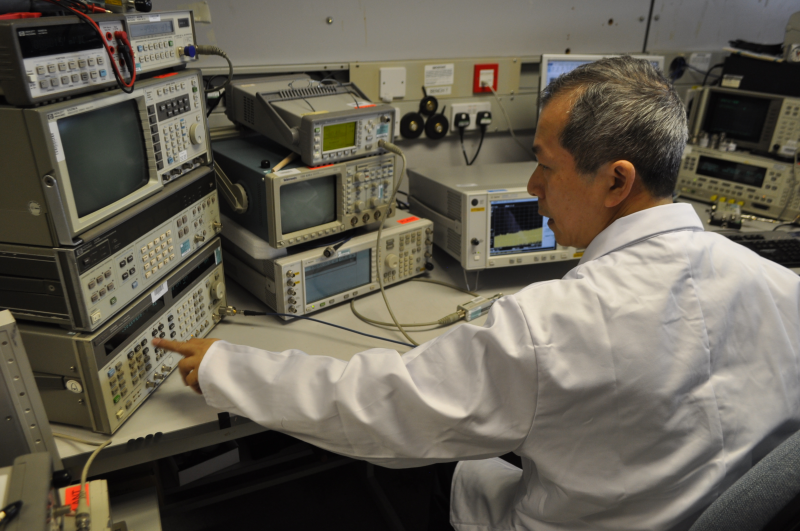 Accredited calibration houses will have demonstrated to the UK Accreditation Service that they possess the technical competence for performing specified measurements. It is often assumed, mistakenly, that accredited calibration houses will be superior. However, they can only offer accredited calibration for the specific parameters they have gained accreditation for. A calibration house without accreditation can still provide a service of equally quality under the right circumstances (i.e. where accredited calibration houses lack accreditation for particular parameters). Before picking a calibration house a full audit should be undertaken.
Often a customer will request calibration to the manufacturer’s original specification, though it must be understood that this might not actually cover the full calibration requirements which a particular application requires. Additional calibration might therefore be required. It is critical that if a customer wishes to have their equipment calibrated to the original specification that the calibration house informs them of any parameters it is not capable of measuring.
For big companies with large equipment inventories, keeping on top of calibration activity can prove difficult – having to take care of calibrating a multitude of different equipment models from various manufacturers. This will either require them to deal directly with the manufacturers themselves or specific calibration houses that are appropriate for each of these items. If a company needs to go to multiple manufacturers or calibration houses, they may have to contend with major procedural discrepancies – such as differences in turnaround times, standards conformed with, costing models (whether additional charges for transportation or certificates will be accrued, etc.). Issues like downtime will need to be managed correctly. Care should to be taken so that the impact that not having vital equipment has on a company’s ability to generate revenue is minimised. Time and resources must be allocated to keeping everything up to date, as well as dealing with the related paperwork. There are benefits if companies have access to some sort of management software package for calibration support. Developing in-house software is unlikely to be a viable option, so effort must be put into finding a suitable calibration partner via which an existing software package that is highly optimised for such endeavours can be utilised. Through such software it is possible for calibration certificates to be stored online (so there is no chance of them being misfiled or simply lost). Regular reports can flag what items are due for calibration, as well as information imparted on what items are due to be returning.
In conclusion, decisions on calibration are often taken purely from the viewpoint of cost, with responsibility given exclusively to the purchasing department. Consultation with engineering staff is, at best, minimal – resulting in the company’s overall operational effectiveness suffering. Most of the time calibration strategies are reactive rather than proactive in nature – with potential issues stemming from this. By engaging with a calibration service provider, the numerous admin tasks that calibration management normally requires can be offloaded. The whole process can be streamlined significantly by working with an experienced third party calibration team and use of advanced software tools. This approach means that a company does not have to utilise its own resources and can remain fully focussed on its core business activities. Replacement units for those being calibrated can be offered so that continuity is not interrupted.
