
By David Southworth, Temperature Calibration Specialist & Technical Trainer, Isotech
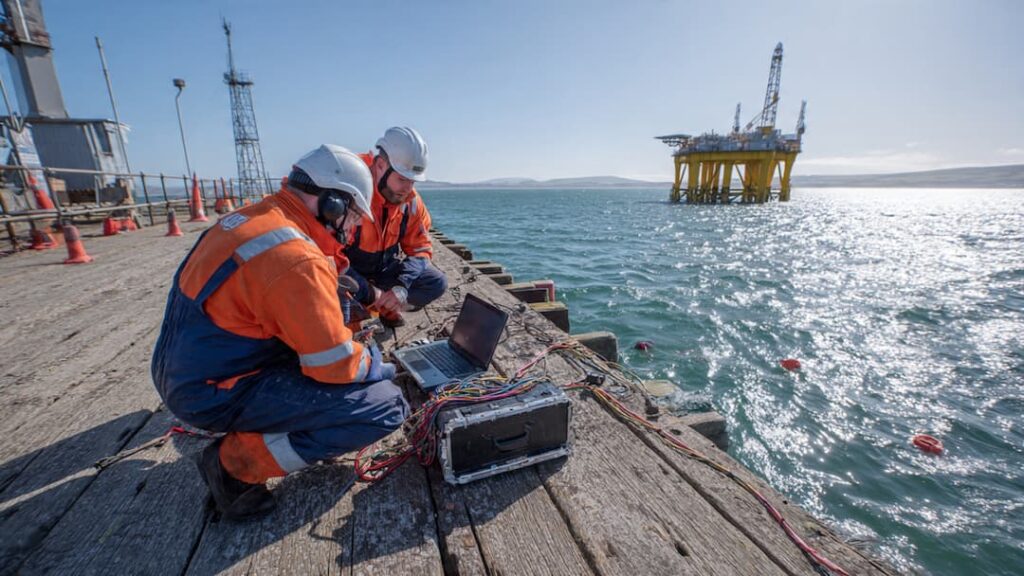
Deep-ocean warming unfolds in increments of millikelvins, thousandths of a degree Celsius. We explore how metrology-grade calibration is moving from the lab to the high seas to safeguard the integrity of climate data.
The world’s oceans are immense heat stores, quietly absorbing approximately 90% of the excess energy trapped by greenhouse gases. This makes Ocean Heat Content (OHC) one of the most vital metrics for tracking global warming. However, because water has such a high heat capacity and the oceans are so vast, this massive energy absorption results in temperature shifts that are paradoxically subtle.
Over decades, deep-ocean warming may unfold in increments measured in millikelvins (mK). Yet, even these tiny fractions matter immensely. Due to thermal expansion, a few millikelvins of warming across the ocean’s volume translates into significant sea-level rise. Detecting these minute shifts demands instruments that can be trusted not just in a calibration laboratory, but in the field, in environments that are anything but controlled.
The Paradox of Scale
Oceanographers and climate scientists routinely confront a difficult paradox: the signals they seek are huge in consequence yet tiny in magnitude.
Deep below the surface, temperature changes unfold slowly. At the sea surface, measurements must be precise enough to serve as reference points for satellite remote sensing campaigns, where consistency across instruments is paramount. Conventional thermometry often falls short when uncertainty margins need to be constrained to a few thousandths of a degree Celsius over long periods.
In oceanographic contexts, this shortfall is compounded by harsh environments. Instruments must maintain calibration under extreme hydrostatic pressure, exposure to corrosive seawater, and thermal gradients that vary wildly with depth and season.
Anchoring the Scale
To meet these demands, researchers have adopted approaches more commonly associated with National Metrology Institutes (NMIs). This involves the use of fixed points on the International Temperature Scale of 1990 (ITS-90).
Two fixed points are particularly relevant for oceanography:
- The Triple Point of Water: Occurring at exactly 0.01°C.
- The Melting Point of Gallium: Occurring at 29.7646°C.
By happy coincidence, these two physical constants perfectly bracket the temperature range of the vast majority of the world’s ocean water. By calibrating sensors against these fundamental physical references, scientists achieve a level of confidence that simple electronic calibration cannot match.
Innovations by UK metrology specialists, such as Isothermal Technology Ltd (Isotech), have been pivotal here. Their development of apparatus capable of realising these fixed points outside of strict NMI conditions has allowed research vessels and coastal laboratories to maintain “primary standard” accuracy. This ensures that a sensor deployed in the North Atlantic is reading from the exact same scale as one in the Southern Ocean.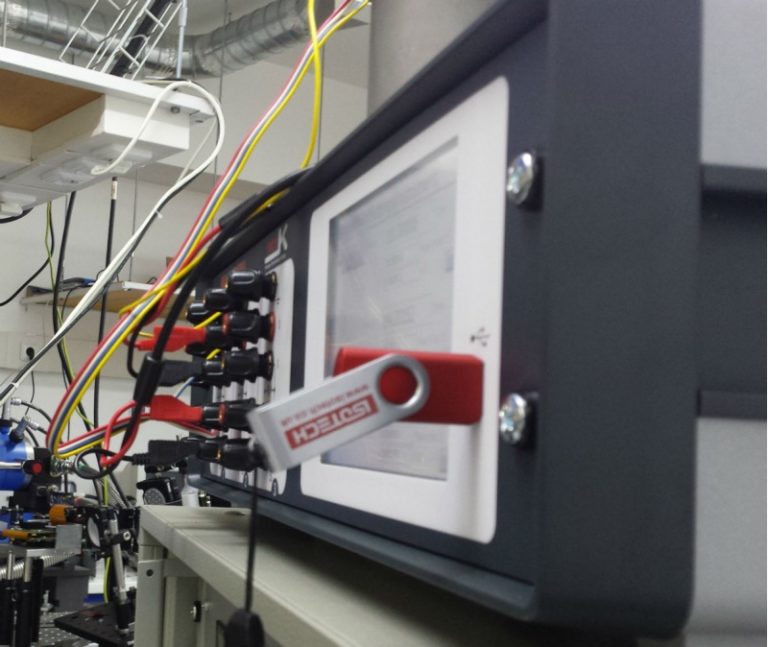
Precision Where it Matters
The practical application of this precision is most visible in the deployment of CTD instruments—the “workhorses” of physical oceanography.
CTDs are complex instrument packages that measure Conductivity (to determine salinity), Temperature, and Depth (via pressure). Usually mounted on a large rosette frame and lowered thousands of metres through the water column, they provide the vertical profiles necessary to understand ocean circulation and density.
Because salinity calculations are highly sensitive to temperature errors, even a slight drift in the temperature sensor can skew density data, potentially leading to erroneous conclusions about ocean currents. Consequently, collaborative work by research organisations in Canada and Europe has focused on facilities capable of calibrating these reference thermometers with sub-millikelvin uncertainty.
By combining Standard Platinum Resistance Thermometers (SPRTs) with the fixed-point references mentioned above, calibration uncertainties below 1 mK are now achievable. This ensures that when a CTD profiler detects a change in the deep ocean, it is a genuine environmental signal, not an instrumentation artefact.
A Foundation for Understanding
What unites these diverse applications is a shared commitment to measurement rigour. As climate research increasingly focuses on detecting small trends over long time horizons, the supporting measurement infrastructure must evolve.
High-resolution sensors alone are not sufficient; they must be embedded within calibration frameworks that can demonstrate stability and traceability over years. Whether tracking the thermal expansion driving sea-level rise or validating satellite data, traceable low-uncertainty temperature measurement is the bedrock of valid data.
Ultimately, the role of precision thermometry in climate research is quiet but foundational. In disciplines where the signals are small but the implications are global, the importance of sound measurement practice cannot be overstated.
Further Reading
- Isotech in Climate & Oceanographic Research, Isothermal Technology Ltd.
- International Temperature Scale of 1990 (ITS-90), Joint Committee for Guides in Metrology (JCGM).
- Deep Ocean Reference Thermometry Research, National Research Council Canada.


