Typically, cable sizing is treated as a routine electrical task: calculate the load current, select a higher-rated cable and move on. In conventional linear loads, that approach has worked for decades. However, many modern industrial facilities feature variable speed drives (VSDs), harmonic filters and various power quality equipment, making this traditional thinking problematic. Here, John Mitchell, global sales and marketing director at CP Automation, explores some of these challenges.
Incorrect cable sizing doesn’t just harm efficiency, it can cause other issues like overheating, nuisance tripping, premature component failure and expensive rework that’s only discovered at commissioning. When working with different electrical components, cable sizing must be treated as a critical design decision, not an afterthought.
Cable sizing challenges in VSD systems
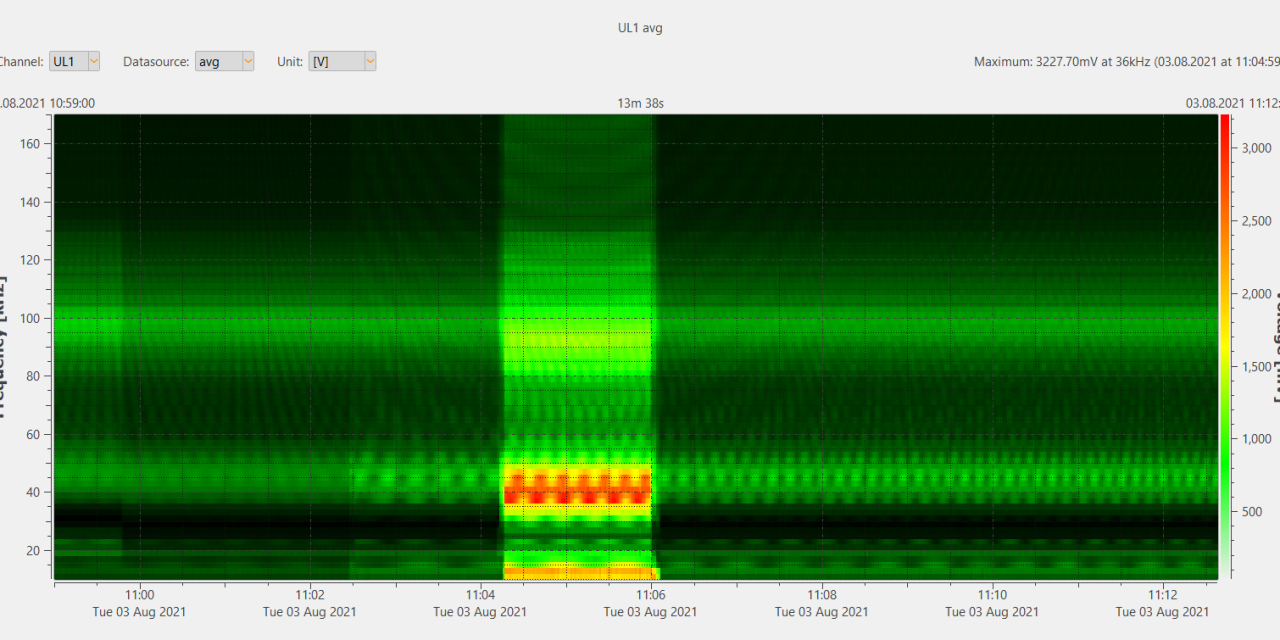
Variable speed drives (VSDs) are non-linear loads that draw current in pulses, introducing harmonic distortion into the supply. These harmonics alter the way current is distributed within a conductor. At the fundamental frequency, current flows relatively uniformly through the conductor’s cross-section, with a significant portion travelling near the centre. As frequency increases, however, current is forced toward the outer surface of the conductor — and this is known as the skin effect. Consequently, higher-frequency harmonic currents are increasingly confined to the conductor’s surface, reducing the effective cross-section available for current flow.
Standard cable ratings assume even current distribution across the conductor, but harmonics break that assumption. As a result, only a portion of the conductor carries significant harmonic current, increasing resistance and heat. Oversizing cables traditionally mitigated this, but the addition of harmonic mitigation equipment has made careful sizing even more critical.
Harmonic filters, which actively inject currents to cancel distortion, may carry predominantly harmonic current themselves. This makes cable derating essential, typically by a factor of 1.35 to 1.5 depending on the application and harmonic content. Without appropriate derating, cables can easily overheat and filter performance can be reduced.
Finally, protection devices, such as circuit breakers and miniature circuit breakers (MCBs), must also be considered. These devices respond to thermal effects, and if sized only for the fundamental current, they risk nuisance tripping or providing inadequate protection in the presence of harmonic heating.
The hidden cost of harmonics
High harmonic currents add thermal stress on cables, terminations and protective devices. Over time, this can lead to insulation breakdown, melted conductors and hard-to-detect intermittent faults. Usually, these issues only become visible during commissioning – when downtime is most expensive.
We often find that the root cause of these issues is a disconnect between stakeholders. One party may specify the harmonic filter, another supplies it and a third installs it. None of these fully accounts for cable derating, installation method or protection coordination.
For example, electricians are rarely trained in harmonic behaviour, so unless the system is designed holistically, errors become inevitable.
Sizing for CTs
Cable sizing errors are particularly problematic in current transformer (CT) circuits. Because CT secondary circuits operate at low voltage – typically 1A or 5A – they are often treated more casually. Some installers may assume “any small cable will do”. However, CTs are highly sensitive to burden – the total load imposed by cable length, cable size and connected devices.
If the burden exceeds the CT’s rating, the CT could overheat or fail. This impacts metering accuracy, power factor readings and harmonic measurements. In extreme cases, CTs can burn out.
Incorrect CT cable sizing can also directly distort power quality measurements and lead to financial penalties. We recently saw the impact of this when visiting a customer who had been penalised for having a power factor of 0.56, despite on-site measurements showing near unity. The cause was traced to the CT wiring installed using thin bell wire over a long loop. Simply replacing the cable with correctly sized conductors immediately restored accurate readings – no equipment changeouts were needed.
Correct CT cabling is important for safety reasons, too. CT secondaries must never be left open-circuited. Appropriate shorting terminals should be installed close to the CT, enabling the circuit to be safely shorted before any downstream disconnection. Without proper shorting, dangerously high voltages can develop, damaging equipment and posing a risk to people on site.
Getting started
Many of the issues I’ve discussed originate early in the project lifecycle. Cable sizing decisions are often made in isolation, with responsibility split between consultants, equipment suppliers and installers. Without a clear understanding of harmonic behaviour and CT burden, critical details are missed long before the system reaches the site.
Correct cable sizing for power, harmonic filters and CT circuits is not just good engineering practice, it’s crucial for reducing costs and maintaining uptime. By treating cable selection as part of the overall power quality strategy, businesses can avoid unnecessary compromises and ensure their systems perform as intended. That’s why, at CP Automation, we’ve developed a holistic approach that covers everything from cable selection to power analysis and mitigation.
Correct cable sizing is critical to the safe and effective operation of power quality systems. Considering harmonics, derating, CT burden and installation requirements early in the design process helps avoid measurement errors, equipment stress and unnecessary cost.
For more information on industrial power quality, including measurement and mitigation options, including harmonic filters, surge suppression and power factor correction, visit the CP Automation website or speak to a member of the engineering team to get the advice you need.
Read other recent instrumentation news: https://instrumentation.co.uk/category/news/