

Flow measurement plays a crucial role across various sectors, ranging from water utilities to industrial applications. The ability to accurately and reliably measure low flows is becoming increasingly important as both utility and industrial companies look to maximize their understanding of their water usage. Water companies therefore require precise data both for customer billing of clean water and monitoring of wastewater to comply with environmental regulations. With around three billion litres of water being lost from UK water distribution networks, measurement of low flows is also essential for leak detection.
Several trends are driving the need for improved low flow measurement technologies. A major factor is the increased focus on sustainability, which is pushing the demand for accurate water measurement to minimize waste and improve management of existing water supplies. Technological advancements have also revolutionized the ability to measure low flows accurately and reliably, with the development of advanced flowmeters like electromagnetic flowmeters, which offer distinct benefits over other meter types.
For billing and regulatory compliance, accuracy and repeatability are essential. Accuracy ensures that billing for utilities or chemicals is based on precise measurements, preventing undercharging or overcharging and maintaining fairness for both the provider and consumer. Repeatability provides consistent measurements over time, which is vital for tracking and auditing usage patterns to comply with regulatory standards.
It therefore follows that achieving the highest standards of accuracy and repeatability across the fullest range of flows requires careful consideration when it comes to choosing the best type of flowmeter.
Traditional mechanical meter technologies are subject to wear and tear over time, requiring costly maintenance that may include replacement of bearings and other moving parts, plus periodic recalibration that can create disruption when the meter is taken out of service. Another design limitation of mechanical flowmeters is the presence of mechanical parts that present an obstruction to the fluid passing through the pipe. This causes a loss of line pressure that may become particularly significant when the flow rate is very low, or in gravity fed systems.
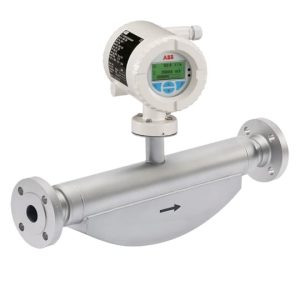
In contrast, modern techniques such as coriolis, ultrasonic and electromagnetic are finding increased popularity due to their numerous advantages and benefits. Coriolis flowmeters work by passing liquid through a vibrating tube. This vibration causes a Coriolis effect in the flow stream, which produces a measurable twisting of the tubes that is proportional to the mass flow. While they provide highly precise measurement of mass flows, they can generate a significant pressure drop and can also be expensive.
Ultrasonic flowmeters work by measuring the transit time of short pulses of ultrasound to calculate the flow velocity with the probe either inserted directly into the flow stream or clamped on to the external pipe wall. Both versions have no pressure drop, and offer good accuracy, making them an ideal choice for custody transfer applications. Clamp on transducers offer the benefit of being able to be installed without shutting down the process and are a good choice for temporary measurements.
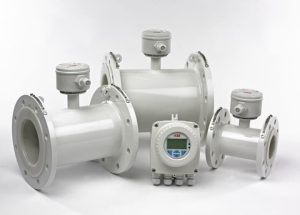
Electromagnetic flowmeters are a cost-effective solution with low maintenance and long lifespan. They offer highly accurate velocity measurement across any free-flowing conductive fluid, including applications such as water distribution networks where flow rates can vary significantly.
The lack of any intrusive components within the flow sensor means there are no moving parts that can cause permanent pressure losses or fail over time, therefore reducing maintenance needs and improving reliability. This absence of obstructions is also key in preventing pressure drops. This is especially critical for gravity fed or low-pressure systems.
One potential limitation for low flow measurement is that the pipe must be full, but this can be solved by installing the meter in a vertical pipe with flow going up. ABB’s electromagnetic flowmeters feature empty pipe detection, which alerts users if the pipe is not full to warn that there are issues with the application even though the meter is working fine.
Electromagnetic flowmeters also offer benefits when it comes to installation. ABB’s octagonal optimized bore and reduced bore flowmeters, for example, reduce the upstream and downstream straight run lengths, as well as increasing the flow velocity for better measurement accuracy at low flows.
ABB can provide both a traditional calibration of electromagnetic flow meters at its Gloucester factory as well as modern in-situ verification techniques to keep track of performance without having to remove the meter. Backwards compatibility also allows customers to upgrade the transmitter without replacing the entire meter, reducing costs and downtime.
The importance of low flow measurement cannot be overstated. As a highly accurate and reliable method of flow measurement, electromagnetic flowmeters play a crucial role in ensuring efficient water management across various applications. As the demand for sustainable and efficient water usage grows, the adoption of advanced flow measurement technologies will continue to rise, driving further innovations and improvements in the field.
ABB will be showcasing a selection of industry-leading innovations at WWEM and AQE. WWEM will feature the AquaMaster 4 flowmeter and My Measurement Assistant digital service tool, along with other advanced solutions for water and wastewater management. Visit stands E4 and E5 at WWEM.
Learn more: https://new.abb.com/products/measurement-products/flow
